

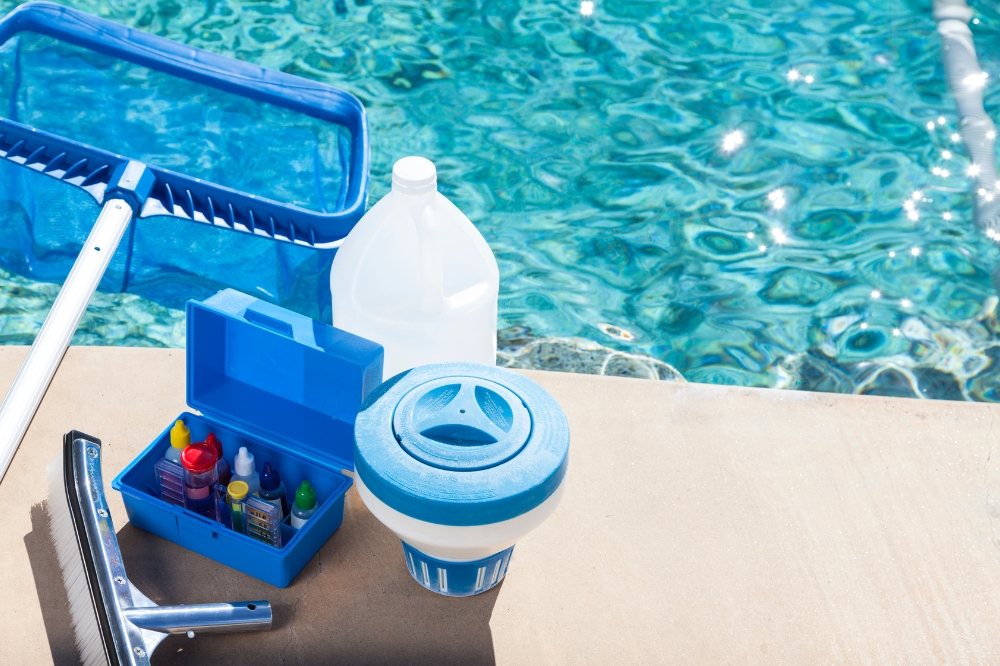
Rainstorms throw off the delicate chemical equilibrium of pools through dilution of chlorine, reduction of pH and total alkalinity, and the addition of organic matter from the environment. The process of restoring a pool after a storm involves waiting a few hours for the water to settle, then retesting and rebalancing pH and total alkalinity, followed by shocking to restore proper sanitizer levels.
This guide will explain the effects of rainstorms on pool water chemistry, the proper sequence of treatment, and methods of preventing future imbalances during the frequent summer storms in the Palm Coast area.
Why Rainstorms Disrupt Pool Chemistry
The acidity of the rainwater is greater, and its composition is not the same as that of the water in a pool. Mixing rainwater with water in the pool will dilute the sanitizer and lower the pH and total alkalinity levels. Rainwater also has organic contaminants brought into the pool by the environment.
Heavy or prolonged rainstorms have a more significant effect on pH than lighter precipitation due to the higher volume of water, and windy conditions during storms can contribute to the amount of foreign matter entering the pool. In addition, heavy rains often lead to overflows and subsequent loss of proper chemical levels in the pool. Many homeowners who need professional pool cleaning in Palm Coast call for assistance after a storm to address these issues, as the combination of diluted sanitizers with additional organic matter present after a storm is a common contributor to cloudy or green water.
Step 1: Test the Water Following the Storm
The first procedure for restoring a pool after a heavy rainstorm is to test the water chemistry. This is best done a few hours after the storm has passed, to ensure that the water has had time to settle. Testing should include free chlorine, pH, total alkalinity, and cyanuric acid (stabilizer).
It is important to test the water after a storm, as the levels of sanitizer and pH can fall significantly during the event. A test kit or test strips provide the most accurate results and allow the next steps in the process to be chosen.
Step 2: Rebalance pH and Total Alkalinity
Before proceeding to the next steps in the process of restoring a pool after a heavy rainstorm, it is necessary to bring pH and total alkalinity to the proper levels. This is achieved by adding a pH increaser and/or total alkalinity increaser and following the directions provided by the manufacturer of the selected product.
The recommended levels are between 7.4 and 7.6 for pH and 80 and 120 ppm for total alkalinity. It is important to test and adjust pH and total alkalinity in the proper sequence: test and adjust total alkalinity first, and then proceed to pH. After adjusting either of these two parameters, it is recommended that the pool pump be allowed to run for several hours before retesting.
Step 3: Shock the Pool
The next step in the process of restoring a pool after a heavy rainstorm is to shock the pool. In most cases, this requires a higher dose of shock than the recommended weekly dosage of shock, due to the reduction in sanitizer levels during the storm.
The procedure is recommended to be started in the evening or at night. It is suggested to run the pool pump for at least 8 hours after shocking the water. In the morning, it is recommended to test the free chlorine level.
Step 4: Clean Debris From the Pool
As mentioned above, rainstorms often carry organic matter from the environment into the pool. It is necessary to skim large debris from the pool and to remove any smaller particulate matter from the filtration system.
The process related to cleaning involves the skimmer and pump baskets and vacuuming any large debris from the pool. It is also recommended that the walls and floor of the pool be brushed to dislodge any particulate matter.
After a particularly heavy rainstorm, it may be necessary to inspect the equipment for damage sustained during the event.
When to Call a Professional
The process outlined above is not always appropriate for every situation. If the water in the pool has not cleared up within 48 to 72 hours of initiating the process, or if the owner is uncertain about the dosages of the various chemicals, it may be necessary to call a professional to treat the pool. This is particularly the case if the owner is unsure how to calculate the amount of product to add based on the size of the pool. This is especially the case after particularly severe storms that may have affected the operation of the pool equipment. If a homeowner wishes to have a pool professional complete the process, they can request a quote, and a pool professional can come to the pool and confirm the appropriate course of action.
Final Thoughts
Heavy rainstorms are a regular occurrence in the summer months in the Palm Coast area but need not involve weeks of cloudy or green water. By following the outlined procedure of waiting for the water to settle, testing and rebalancing pH and total alkalinity, and then shocking the pool, most problems can be remedied within a matter of hours or days.
Those who prefer to have a professional take care of restoring a pool after a heavy rainstorm can request a quote from Haven Pools LLC to provide efficient and effective maintenance services throughout the Palm Coast area.
Frequently Asked Questions
1. How soon after a rainstorm should I test my pool water?
Ideally, testing should be done a few hours after a storm passes, to allow the water to settle. Waiting any longer reduces the effectiveness of the procedure.
2. Can I add chlorine and pH adjusters at the same time after a storm?
It is better to adjust pH and total alkalinity first, and then proceed to shocking.
3. Why does my pool look cloudy the day after a storm even with normal chlorine levels?
After a storm, the water often contains a high amount of foreign particulate matter that the filtration system must clear. This may require additional time or the addition of a clarifying agent.
4. Is it safe to swim right after treating my pool post-storm?
It is recommended to wait before swimming until the levels of free chlorine have been reduced to a safe range and the water has been adequately filtered.